Pumping water from High Plains aquifer reducing stream flows, threatening fish habitat
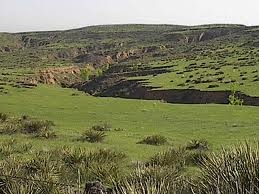
Suitable habitat for native fishes in many Great Plains streams has been significantly reduced by the pumping of groundwater from the High Plains aquifer -- and scientists analyzing the water loss say ecological futures for these fishes are "bleak."
Results of their study have been published in the journal Ecohydrology.
Unlike alluvial aquifers, which can be replenished seasonally with rain and snow, these regional aquifers were filled by melting glaciers during the last Ice Age, the researchers say. When that water is gone, it won't come back -- at least, until another Ice Age comes along.
"It is a finite resource that is not being recharged," said Jeffrey
Falke, a post-doctoral researcher at Oregon State University and lead
author on the study. "That water has been there for thousands of years,
and it is rapidly being depleted. Already, streams that used to run
year-round are becoming seasonal, and refuge habitats for native fishes
are drying up and becoming increasingly fragmented."
Falke and his colleagues, all scientists from Colorado State University
where he earned his Ph.D., spent three years studying the Arikaree River
in eastern Colorado. They conducted monthly low-altitude flights over
the river to map refuge pool habitats and connectivity, and compared it
to historical data.
They conclude that during the next 35 years -- under the most
optimistic of circumstances -- only 57 percent of the current refuge
pools would remain -- and almost all of those would be isolated in a
single mile-long stretch of the Arikaree River. Water levels today
already are significantly lower than they were 40 and 50 years ago.
Though their study focused on the Arikaree, other dryland streams in the
western Great Plains -- composed of eastern Colorado, western Nebraska
and western Kansas -- face the same fate, the researchers say.
Photo credit: Natural Kansas.org
Article continues: Science Daily