Army has New Greens
The U.S. Army has been on a mission to reduce its
energy consumption and shift as much of its use to
clean sources as it can. That apparently hasn’t
happened fast enough, so the service branch has
redoubled efforts with the creation of a task force
intended to woo private sector investment.
For more than a decade, the armed services have been
using large tracts of land on military bases for
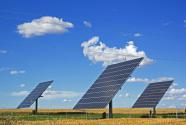
wind, solar and other clean energy projects. Now, it
is moving toward utility scale development that
could need more than $7 billion of private sector
investment.
John M. McHugh, secretary of the army, announced the
establishment of the Energy Initiatives Office (EIO)
Task Force at the GovEnergy Conference in
Cincinnati, Ohio. The EIO Task Force is now
operationally.
“We’re looking to work with the private sector, to
serve as a one-stop shop to find the opportunities
for partnership on a variety of renewable energy
programs,” McHugh said.
The Army already has 126 renewable energy projects
underway.
“We view ourselves as a target-rich environment to
do a better job with taxpayer dollars,” said McHugh
during a press conference.
The partnerships would give the private sector a
guaranteed customer in the Army and any excess
generation would be returned to the utility’s
resource base, the proverbial “win-win.”
Currently, about 21 percent of the Defense
Department’s energy consumption is from Army
facilities.
But the Army has a long way to go to meet its
ambitious targets. It now generates about 2 percent
of its needs, which translates to 10 megawatt-hours.
For the economies of scale contemplated, the new
initiative is seeking big projects of 10 megawatts
or larger.
The Army says the new EIO Task Force is integral to
the Army addressing rising energy security
challenges, escalating fuel prices, and stricter
federal mandates.
"To meet a goal of 25 percent renewable energy by
2025, the Army must use every opportunity to be
energy efficient and draw power from alternative
and/or renewable energy sources," McHugh said.
The scale of renewable energy production the Army
needs in order to provide enhanced energy security
is estimated to require investment up to $7.1
billion over the next 10 years. This level of
investment is expected to generate 2.1 million
megawatt hours of power annually for the Army.

Copyright © 1996-2011 by CyberTech, Inc. All rights reserved.
To subscribe or visit go to: http://www.energycentral.com