Natural Gas is a Burning Issue
Wasting gas when we are energy starved
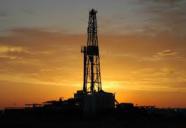
A new issue is sparking interest in natural gas.
It’s “flaring” -- the burning off of natural gas
that is discovered alongside oil deposits.
The procedure has long been used elsewhere but is
only recently coming to light in this country and
especially in the Bakken shale fields of North
Dakota. Neither the oil drillers nor the
environmentalists disagree that the natural gas at
issue should be captured, piped and processed before
it consumed.
But energy conglomerates say that they are unable to
construct the pipelines faster than they can get the
gas. The resource is therefore wasted, or money
literally up in smoke. Beside piping it, the
companies are considering liquefying the gas and
creating LNG that would be globally shipped.
To the green groups, it is about reducing pollution
and minimizing the environmental footprint. They are
contending that the drillers find the high-priced
oil more profitable than the lower-valued natural
gas. As companies plumb America’s rich shale fields,
the price of such natural gas will decline and the
situation will only worsen.
In North Dakota, companies are flaring 100 million
cubic feet of natural gas per day, or about 30
percent of all such gas produced in the state, says
the
New York Times. That’s enough to heat 500,000
homes. Pollution wise, it’s like putting 380,000
cars on the road, it adds, or adding a mid-sized
coal plant to the mix.
Even with the flaring, other drillers are poking
holes in the ground at an ever-rapid rate. For
example, 763 wells were drilled in the Marcellus
Shale region in Pennsylvania, says the
Natural Resource Defense Council. Each well
requires 14 to 80 acres of room, increasing the
multiplier effect, it adds.
“The perverse fact is that the demand for gas is
still very high: These same companies are continuing
to drill elsewhere for the same gas they’re burning
off on the prairies,” writes Peter Lehner of the
resource council. “New gas wells are built every
day, encroaching on wild and scenic landscapes,
disrupting communities, and moving closer and closer
to our urban watersheds.”
Balancing Concerns
Globally, flaring is a much bigger issue. An earlier
study by the
World Bank says that 5.3 trillion feet of
natural gas is flared each year -- about a quarter
of the natural gas consumed in this country and
roughly 30 percent of the gas used in the European
Union. That same study also concluded that global
gas flaring releases about 400 million tons of
carbon dioxide emissions per year.
The major flaring region in the world is Russia and
the Caspian, which is followed by the Middle East
and North Africa. Sub-Saharan Africa is the
third-biggest flaring region and then Latin America.
To battle flaring in Nigeria, which is one of the
biggest culprits, the World Bank says that
government and industry are aggressively outlining
ways to fix the problem.
If producers could monetize the gas and make a
profit, they would do so. That's why they are
investing billions throughout the LNG value chain --
everything from liquefying stations, to transport
ships to re-gasification ports to pipelines.
ExxonMobil, for instance, is spending $3.5 billion
to prevent flaring in Nigeria. To that end, it has
built LNG facilities that will process about 950
million cubic feet of natural gas per day, or enough
to make 50,000 barrels of natural gas liquids.
“In a number of countries, regulatory, financial,
and infrastructure barriers still hamper the
utilization of natural gas associated with oil
production,” says Somit Varma, World Bank Group’s
Director for Oil, Gas, Mining and Chemicals.
“Governments and companies need to cooperate in
removing these obstacles and realizing the value of
this wasted resource while minimizing the
environmental harm caused by gas flaring.”
Transforming such stranded gas into LNG is one
possibility. So, too, is the expansion of the
pipeline and processing network. While trying to
build infrastructure in the United States has been
compared to “herding cats,” both industry and their
regulators say that they are committed to do so.
Otherwise, the potential for shale-gas here will go
unrealized.
Investmentlogs.com interviewed North Dakota’s
Department of Mineral Resources, which says that the
state has tripled its gas processing capacity over
the last five years. Next year, the state’s
processing and transport capacity will be 1.1
billion cubic feet per day.
Flaring is an important issue to the
environmentalists, who are now trying to reconcile
that concern with the needs of producers to
streamline rules and to expand the pipeline network.
If they can work it out, the natural gas at issue
could then be processed and consumed instead of
getting burned off and wasted.
EnergyBiz Insider has been been nominated in 2010
and 2011 for Best Online Column by Media Industry
News, MIN. Ken Silverstein has also been named one
of the Top Economics Journalists by Wall Street
Economists.
Follow Ken on www.twitter.com/ken_silverstein
energybizinsider@energycentral.com

Copyright © 1996-2011 by CyberTech, Inc. All rights reserved.
To subscribe or visit go to: http://www.energycentral.com