Converting rainforest to cropland in Africa reduces rainfall
mongabay.com
September 19, 2011
Converting West
African rainforests into cropland reduces rainforest in adjacent forest
areas, reports research published in Geophysical Research Letters.
The study, based on a computer model used to simulate rainfall under
different land-use conditions, found that cutting down tropical forests
in West Africa reduces precipitation over neighboring forest areas by
about 50 percent due to increased temperatures over cropland areas.
Higher temperatures affect the formation of rain clouds.
"Rainfall was four to six times higher over warm areas (cropland) than
when no deforestation has occurred, while rainfall over the remaining
forest was half or less," stated a press release from the American
Geophysical Union, which publishes Geophysical Research Letters.
"The difference in rainfall is caused by the temperature change between
cropland and forest, which produces winds that converge over the crop
area and form clouds."
The researchers say their work, while applied to a small region, could
have implications elsewhere.
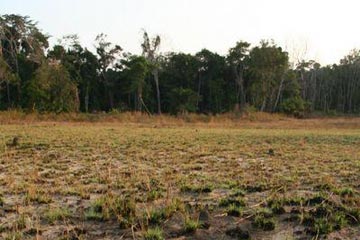
Deforestation in Gabon, Central Africa. Photo by Rhett A. Butler
"We already know from satellite observations that changes in land use
can have a big impact on local weather patterns," said lead author Luis
Garcia-Carreras with the University of Leeds School of Earth and
Environment. "Here we have been able to show why this happens."
"Our findings suggest that it's not just the number of trees removed
that threatens the stability of the world's rainforests. The pattern of
deforestation is also important."
Research elsewhere has shown that patterns of deforestation can have a
signifiant impact on rainfall. A 2006 study found that deforestation
which follows a "fishbone" pattern may be less damaging relative to
traditional clearing. It said fishbone deforestation patterns may create
conditions that increase precipitation levels which help cleared
vegetation recover quicker.
The authors of the latest study say their results could
help planners reduce the impact of deforestation.
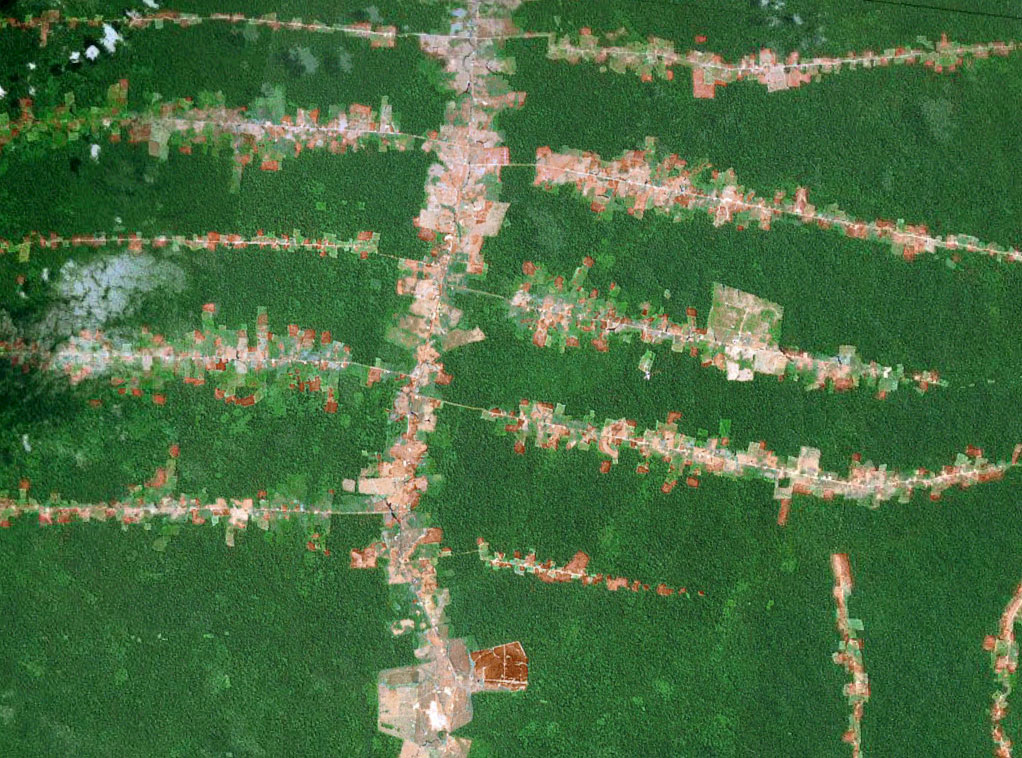
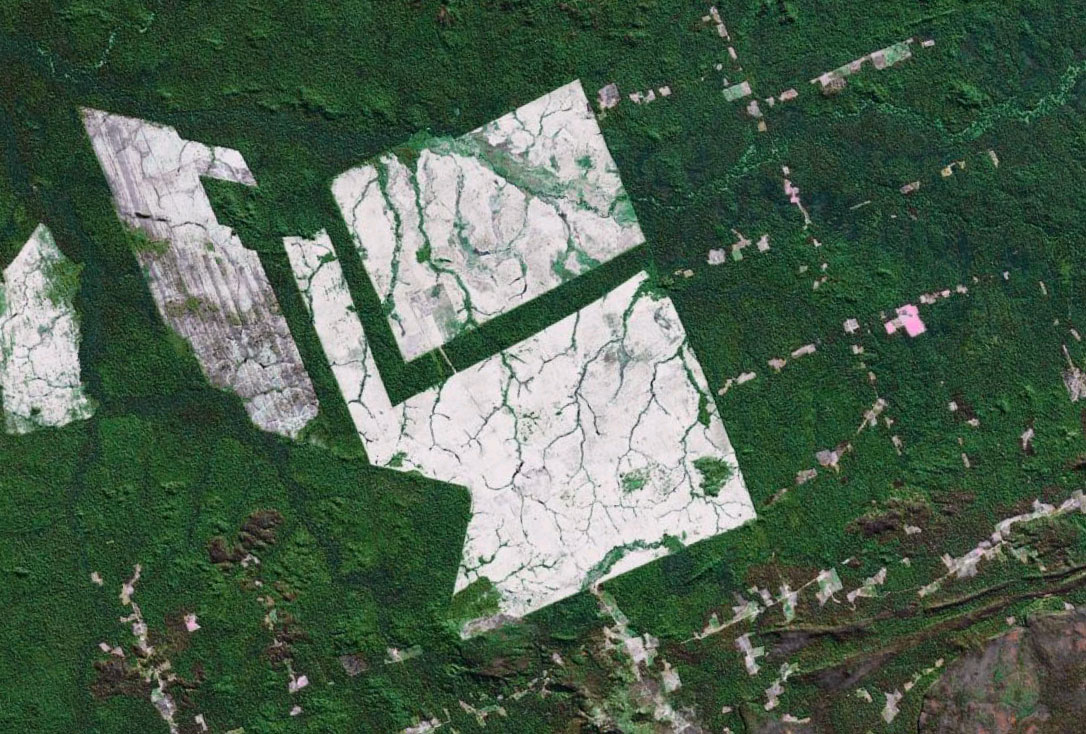
Different forms of deforestation in Brazil, courtesy of
Google Earth. Fishbone deforestation can also speed forest
recovery relative to clear-cutting by creating a larger surface
area between deforested areas and remaining forest. This enables
seed-dispersers like birds, insects, and mammals to help tree
species recolonize cleared areas.
Copyright
mongabay
2010
"This has implications for planners in terms of how deforestation is
managed," said study co- author Doug Parker of the University of Leeds.
"If forest must be removed to create cropland, we need to think about
what are the shapes and distributions of deforestation that will be
least damaging to the adjacent forests and national parks."
The findings are particularly important in West Africa, which has less
rainfall than other tropical forest regions.
"African rainforests already have the lowest rainfall of any rainforest
ecosystem on Earth, which could make them particularly sensitive to
changes in local weather patterns," said Garcia-Carreras. "If rainfall
is reduced even further as a result of deforestation, it could threaten
the survival of the remaining forest by increasing the trees'
sensitivity to drought."
Luis Garcia-Carreras and Douglas J. Parker. "How Does Local Tropical
Deforestation Affect Rainfall?" Geophysical Research Letters